

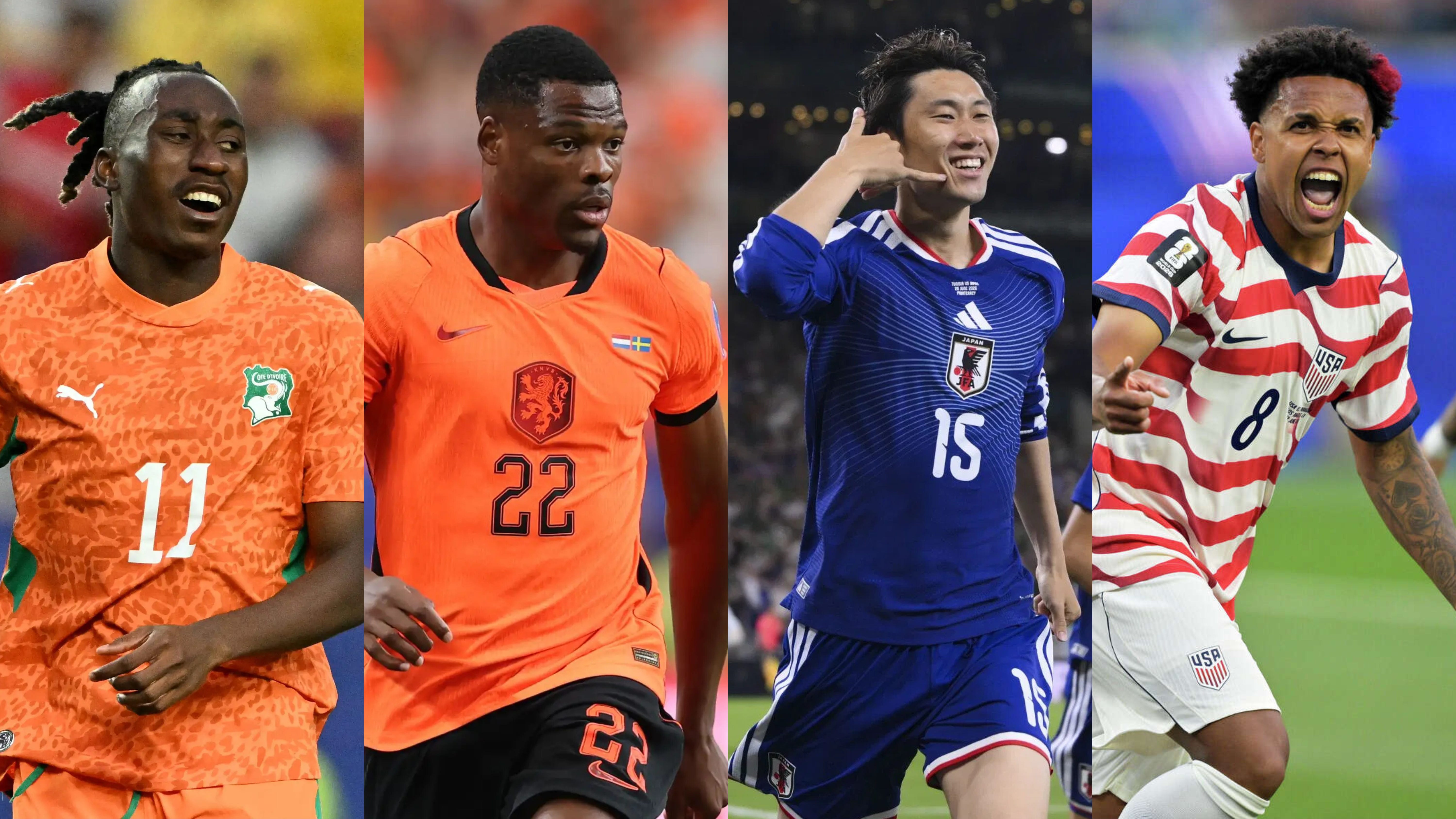
Yesterday answered a lot of questions.
Mexico left no doubt. The hosts closed the group stage with a convincing 3–0 victory over Czechia, finishing with a perfect nine points without conceding a goal. El Tri had already been finding ways to win, but this performance felt different. The attack finally looked as confident as the defense has throughout the tournament. If there were any lingering questions about Mexico’s chances of making a deep run, they are becoming harder to ask.
South Africa delivered the moment of the day.
Needing a win over South Korea to keep its tournament alive, Bafana Bafana found it through Thapelo Maseko’s second-half winner, sending the nation into the World Cup knockout rounds for the first time. South Korea controlled possession after falling behind, but South Africa defended with the kind of urgency that only comes when history is ninety minutes away. Considering the country hosted the tournament in 2010 without advancing beyond the group stage, the moment carried even more weight.
Group C told two very different stories.
Brazil finally looked like the team many expected before the tournament began. The 3–0 win over Scotland was its most complete performance of the World Cup so far, with Vinícius Júnior leading an attack that controlled the match from start to finish instead of relying on isolated moments of brilliance.
Morocco took a far more difficult path.
Haiti led twice. Morocco answered twice. By the time the Atlas Lions completed a 4–2 comeback, they had secured a place in the Round of 32 while also revealing something future opponents will surely notice. The attack has enough quality to rescue almost any match. The defense can still make life more complicated than it needs to be.
Canada also advanced despite a 2–1 defeat to Switzerland. The hosts surrendered first place in Group B, but surviving to the knockout rounds matters far more than finishing with a perfect record.
By the final whistle, Groups A, B and C had been decided, and six more teams had booked their places in the Round of 32.
The World Cup is beginning to narrow.
Germany is chasing a perfect group stage. Ivory Coast is ninety minutes away from making history. Ecuador and Curaçao are running out of chances to extend their tournaments.
Yesterday, several teams learned they had done enough.
Today, everyone else has to prove it.
Here are my predictions, players to watch and tactical storylines for every World Cup Day 15 match.
Germany Has Nothing to Lose. Ecuador Has Everything to Risk.
Two wins from two matches have secured first place in Group E, but don’t expect Julian Nagelsmann to treat this as such. Throughout the week, Germany’s manager has emphasized continuity over rotation, arguing that building chemistry matters more than resting players. Aside from the enforced change caused by Nico Schlotterbeck’s tournament-ending ankle injury, Germany is expected to look very familiar when it takes the field.
Ecuador doesn’t have that luxury.
One point from two matches has left Sebastián Beccacece’s side with almost no margin for error. A scoreless draw against Curaçao followed a narrow defeat to Ivory Coast, leaving them without a goal and needing the kind of performance that can rescue an entire tournament.
That difference in circumstance should shape the match from the opening whistle.
The Germans have looked more comfortable every time they’ve stepped onto the field. Florian Wirtz and Jamal Musiala continue to drift into spaces that are almost impossible to defend, while Nmecha quietly controls the tempo behind them. Germany waits for opponents to lose their defensive shape before accelerating through the middle or attacking wide with overlapping fullbacks.
Ecuador will try to prevent exactly that.
Beccacece has built a disciplined defensive side around Moisés Caicedo, Willian Pacho and Piero Hincapié. Through two matches, that structure has largely held up. Conceding once to Ivory Coast and limiting Germany’s group rivals to very few clear chances is not the problem. Finding the net is.
For all of Ecuador’s defensive discipline, the final pass has repeatedly let them down. Promising attacks have ended with rushed decisions, misplaced through balls or hesitant finishing. It is an unusual problem for a team that entered the tournament unbeaten in its previous qualifying matches, but it has become impossible to ignore.
That leaves Ecuador facing an uncomfortable choice:
Sit deep and Germany will spend ninety minutes probing for openings.
Push numbers forward too early and Musiala, Wirtz and Leroy Sané suddenly have the space they have been waiting for.
If I were Beccacece, I’d accept the first scenario.
Germany is talented enough to score against anyone, but opening the match in the first half almost guarantees Ecuador will spend the afternoon chasing shadows. Stay compact, frustrate Germany, and hope the pressure grows as the clock ticks toward the final twenty minutes. That’s probably the only realistic path available.
Germany, meanwhile, has every reason to keep playing the same way it has all tournament. After consecutive group-stage exits in 2018 and 2022, confidence matters just as much as points. Nagelsmann has spoken openly about maintaining rhythm, and it is easy to understand why. This team finally looks comfortable in its own identity again.
The longer Ecuador keeps the score level, the more interesting this match becomes. I just don’t think they’ll be able to do it long enough.
Player to Watch: Moisés Caicedo
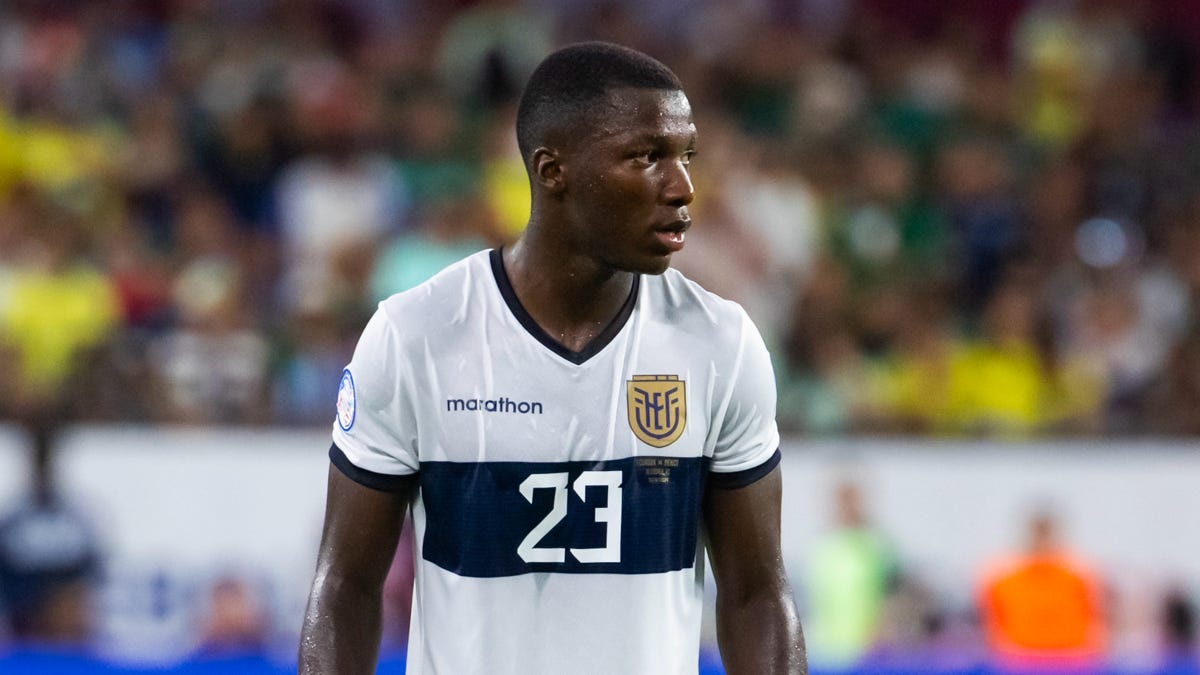
If Ecuador pulls off the upset, Moisés Caicedo will almost certainly be the reason.
This isn’t just about stopping Germany’s midfield. It’s about surviving it.
Few players in the world are asked to cover as much ground as Caicedo, and against Germany that workload only grows. Wirtz drifts inside. Musiala appears between the lines. Kai Havertz constantly drops out of the striker’s position to create overloads. Every movement is designed to force defensive midfielders into impossible decisions.
Caicedo doesn’t have the luxury of getting many of those decisions wrong.
When Ecuador wins possession, his role changes immediately. Germany’s counterpress has been one of the tournament’s biggest strengths, often recovering the ball within seconds of losing it. If Caicedo can play through that first wave, Ecuador finally has a chance to attack a defense that will spend far more time moving toward its own goal than it has in the first two matches.
Statistics probably won’t tell the story of his afternoon. He may finish without a goal or an assist. He might not even register a shot.
But if Ecuador is still level after an hour, there’s a good chance Caicedo has quietly been the best player on the field.
Prediction: Germany 2–1 Ecuador
I don’t expect this to look like Germany’s 7–1 win over Curaçao. Ecuador is too organized defensively for that.
For long stretches, I think Germany will have to be patient. Ecuador has enough quality at the back to frustrate opponents, and Beccacece knows opening the match too early would play directly into Germany’s strengths. If the score is still level approaching halftime, I wouldn’t be surprised.
The problem for Ecuador is that defending Germany for ninety minutes is a different challenge than defending them for forty-five.
Eventually, the movement of Wirtz, Musiala and Havertz should create the opening Germany needs. Once that first goal arrives, Ecuador will have little choice but to push higher, and that’s when Germany becomes most dangerous.
Germany doesn’t need the points. It still looks like a team with something to prove.
A third straight victory would extend the winning streak to 12 matches, maintain the momentum Julian Nagelsmann has been eager to preserve, and send Germany into the knockout rounds looking more like a genuine World Cup favorite than simply a group winner.
History Is Waiting for Ivory Coast. Curaçao Wants One More Upset.
Ivory Coast is ninety minutes from something it has never done.
Despite producing generations of elite talent, the Elephants have never reached the World Cup knockout rounds. That opportunity is finally here, and after two encouraging performances, they have earned the chance to finish the job.
The path hasn’t been easy.
A disciplined 1–0 victory over Ecuador was followed by a narrow 2–1 defeat to Germany, a match that revealed just how competitive Emerse Faé’s side can be. Ivory Coast led the group favorites before Germany’s quality eventually took over, but the result did little to damage the belief inside the squad. If anything, it reinforced the idea that this team belongs on this stage.
Faé has said as much throughout the week.
He believes his players have shown enough to deserve a place in the knockout rounds. He’s probably right.
Tournament football doesn’t care what you’ve deserved. It rewards what you do next.
Curaçao has already shown it won’t make that easy.
The World Cup debutants looked overwhelmed in their opening 7–1 defeat to Germany, but they responded with one of the most resilient defensive performances of the tournament. The scoreless draw against Ecuador was built on organization, relentless defending and a record-setting performance from goalkeeper Eloy Room, whose 15 saves kept Curaçao alive. Dick Advocaat left that match convinced his team could frustrate anyone if it defended with the same discipline again.
Ivory Coast has more pace, more attacking quality and more players capable of deciding the game individually. Amad Diallo, Simon Adingra and Yan Diomande have all shown they can create problems in wide areas, while Franck Kessié continues to provide the balance that allows those attackers to play with freedom.
The bigger question is how patient the Elephants remain if the first goal doesn’t come quickly.
Curaçao will almost certainly defend with numbers behind the ball and force Ivory Coast to break down a compact defensive block. That’s exactly the type of match where frustration can become an opponent of its own.
If Ivory Coast starts forcing passes or settling for hopeful shots, Curaçao will happily accept it.
If the Elephants continue trusting their movement and attacking the wide spaces that have served them well throughout the tournament, the opportunities should arrive.
Curaçao’s best hope lies in transition.
Tahith Chong and the runners around him have to give Ivory Coast something to think about every time possession changes hands. Even if Curaçao creates only a handful of chances, it has to create enough of a threat to prevent Ivory Coast from committing everyone forward without consequence.
I don’t think Curaçao can spend another ninety minutes absorbing pressure the way it did against Ecuador.
For Ivory Coast, this feels bigger than one match.
It’s an opportunity to accomplish something generations of talented Ivorian teams couldn’t.
Player to Watch: Yan Diomande
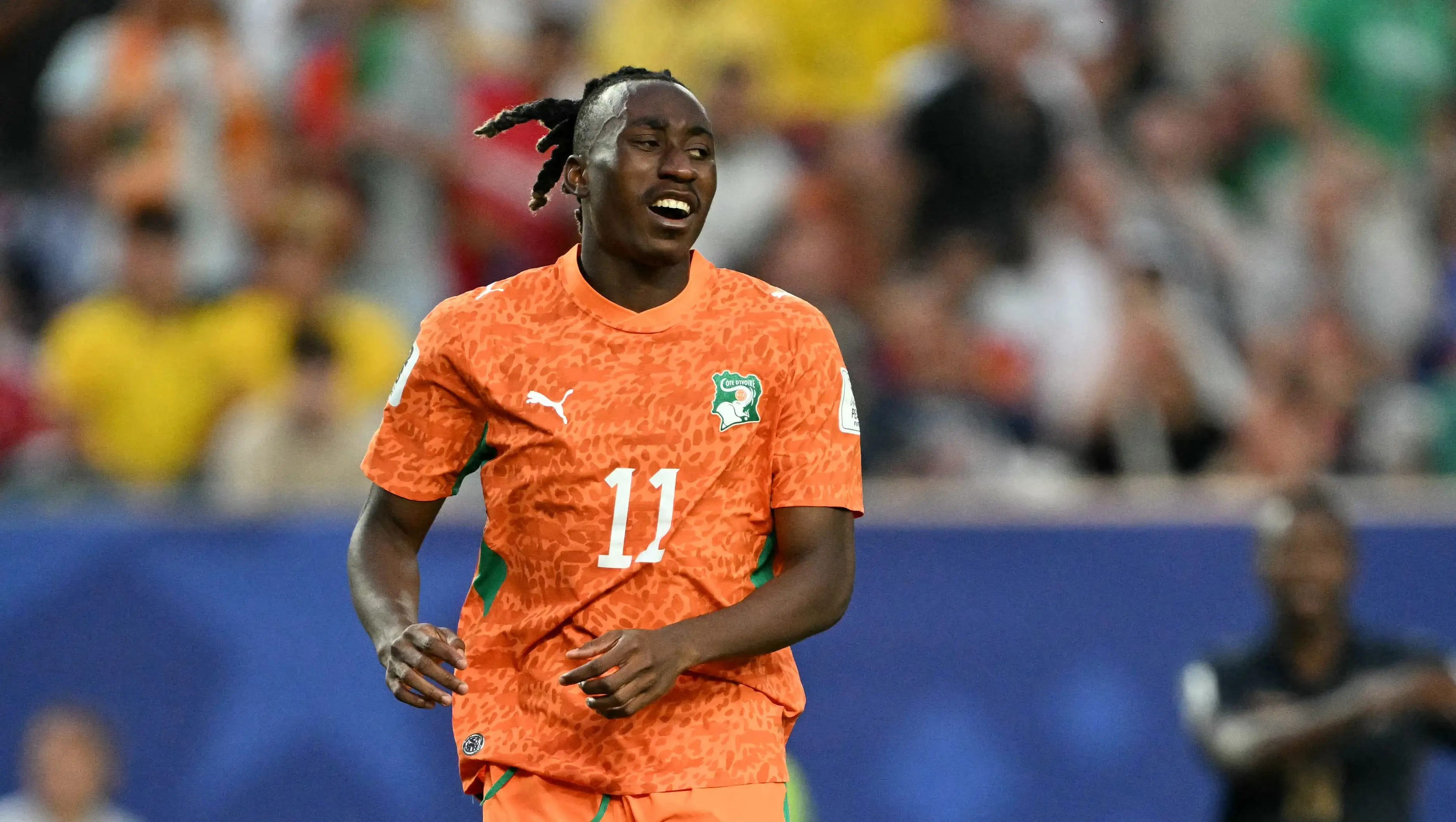
If this match opens up, Yan Diomande will probably be the reason.
The 19-year-old has quietly become one of the breakout players of this World Cup. Germany spent the week preparing for his pace before the teams met in Toronto, and it’s easy to understand why. Few wingers change the tempo of a match as quickly as Diomande does once he has space to attack. His first instinct is to drive at defenders, not slow the game down, and that forces back lines into uncomfortable decisions.
Curaçao knows what’s coming. The challenge is that Diomande is exactly the type of player who can disrupt their structure.
What has impressed me most is how willing he is to keep attacking.
Some young wingers disappear after losing a duel or misplacing a cross. Diomande doesn’t. He asks for the ball again, keeps running at defenders and continues stretching the field until cracks begin to appear. That confidence is a big reason Ivory Coast has looked so dangerous in transition throughout the tournament.
He doesn’t need to score to change this match.
If he consistently forces Curaçao’s back line to shift toward him, Ivory Coast’s other attackers will find the spaces they’re looking for.
That’s exactly the kind of influence that can send the Elephants into the knockout rounds.
Prediction: Ivory Coast 2–0 Curaçao
Curaçao deserves enormous credit for the way it has responded since the opening defeat to Germany.
Many teams would have allowed that result to define their tournament. Instead, Dick Advocaat’s side regrouped, frustrated Ecuador for ninety minutes and proved it belongs on this stage.
I just don’t think it has enough attacking quality to repeat the escape.
Ivory Coast has looked like the second-best team in Group E from the opening matchday. The Elephants defended confidently against Ecuador, competed with Germany and have shown far more ways to create chances than Curaçao has faced outside of Germany.
Room should keep Curaçao in the match for a while, and I wouldn’t be surprised if the score is still level approaching halftime.
But asking him to rescue another ninety minutes against this attack feels like too much. Eventually, Ivory Coast finds the breakthrough.
A second goal arrives as Curaçao begins pushing numbers forward, and the final whistle sends the Elephants into the World Cup knockout rounds for the first time; a milestone that has been decades in the making.
The Netherlands Already Qualified. They’re Still Chasing Something.
The Netherlands have already secured a place in the Round of 32. They’re trying to make the road beyond it a little easier.
After opening the tournament with a frustrating 2–2 draw against Japan, Ronald Koeman’s side responded exactly the way contenders should. A convincing 5–1 victory over Sweden not only restored confidence but also put the Dutch in control of Group F. Japan remains level on points, meaning another win should be enough to finish first and avoid an unnecessarily difficult Round of 32 matchup.
Koeman insists his team isn’t afraid of whoever comes next.
If there’s one thing managers always prefer, it’s controlling the variables they can. Finishing first is one of them.
Tunisia arrives with a very different objective.
Consecutive defeats to Sweden and Japan ended any chance of reaching the knockout rounds, prompting a managerial change midway through the tournament. Hervé Renard inherited an almost impossible situation, but he has made one thing clear ahead of his first match in charge: Tunisia still has something to play for: pride.
That alone makes this a dangerous fixture.
The Netherlands have looked sharper with every match they’ve played. Cody Gakpo has rediscovered his finishing touch, Memphis Depay appears increasingly comfortable despite managing his fitness, and the midfield pairing of Frenkie de Jong and Tijjani Reijnders has quietly controlled games without needing to dominate the headlines.
What has impressed me most, though, is how flexible this team has become.
Against Sweden, the Dutch punished every transition. Against Japan, they showed they could patiently break down a well-organized defense. Those are two completely different challenges, and Koeman’s side handled both without abandoning its identity.
Tunisia hasn’t shown that same adaptability.
The Eagles of Carthage have struggled most when opponents attack quickly after winning possession. Both Sweden and Japan repeatedly exposed the spaces behind Tunisia’s advancing fullbacks, forcing defenders into recovery runs they rarely won. Renard will almost certainly ask his side to defend deeper tonight, even if that means sacrificing long stretches of possession.
It’s probably the right approach.
The alternative is trying to press one of the tournament’s most technically gifted teams across ninety minutes.
I don’t see that ending well.
Still, the Dutch can’t afford to become impatient.
Eliminated teams often play with a freedom qualified teams don’t have, and Denzel Dumfries acknowledged as much this week. Tunisia has nothing to lose. If the Netherlands starts forcing passes or assuming the breakthrough will come naturally, frustration could creep into a match it should otherwise control.
I just don’t expect that to happen.
The Dutch have looked increasingly comfortable every time they’ve stepped onto the field, and another disciplined performance would send them into the knockout rounds with genuine momentum.
Player to Watch: Denzel Dumfries
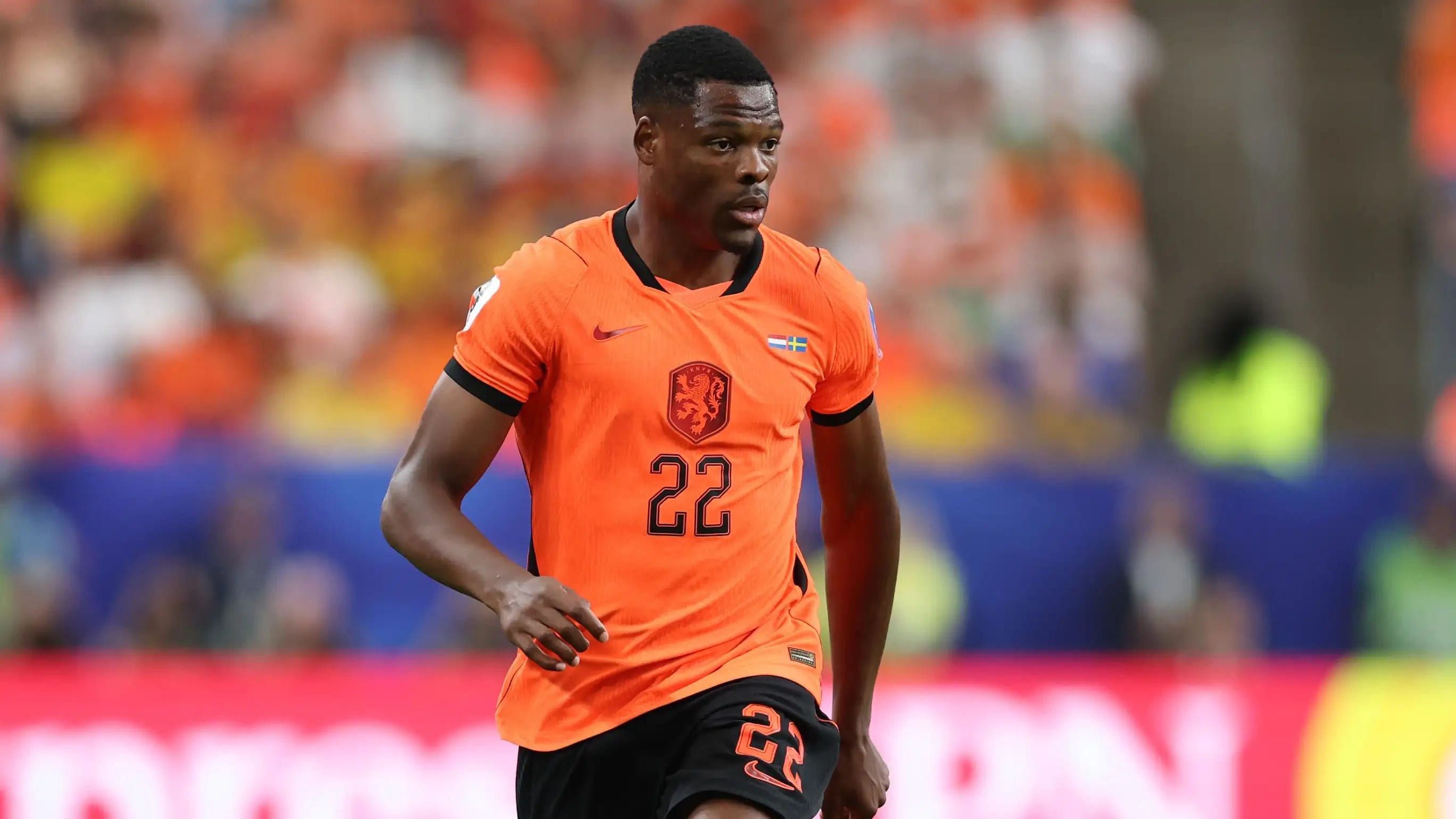
Tunisia already has enough problems trying to stop Cody Gakpo and Memphis Depay. Now imagine dealing with Denzel Dumfries arriving from deep every few minutes.
That’s what makes him such a difficult player to defend.
On paper, he’s a right back. In reality, he often spends long stretches playing like an extra winger. Against Sweden, those forward runs produced two assists, and every overlap forced defenders into uncomfortable decisions.
Tunisia’s left side has struggled throughout the tournament, particularly when opponents attack immediately after winning possession. That’s exactly where Dumfries thrives.
If Tunisia shifts an extra defender toward Gakpo, Dumfries has space to attack. If they stay compact, he’ll have time to deliver crosses into the box.
I wouldn’t be surprised if he creates several of the Netherlands’ best chances before the night is over.
Prediction: Netherlands 3–0 Tunisia
Renard’s arrival will bring more defensive organization, and national pride alone will ensure this isn’t another passive performance.
Eventually, though, quality wins.
The Netherlands simply have too many attacking options, too much movement and too much at stake to let this opportunity slip away. Once the first goal arrives, Tunisia will have little choice but to push higher, and that’s when Koeman’s side becomes most dangerous.
The Dutch finish first in Group F.
More importantly, they head into the Round of 32 looking like one of the most balanced teams left in the tournament.
The Best Match of Day 15 Might Not Decide First Place. It Might Decide Who No One Wants to Face.
This is the match I’ve been looking forward to most.
Not because it’s the biggest game on the schedule. Because it feels like the best football game on the schedule.
Japan and Sweden arrive from completely different directions. Japan has looked increasingly comfortable with every match, recovering from an opening draw against the Netherlands before beating Tunisia 4–0 with the same composure that has become its trademark under Hajime Moriyasu. Sweden’s path has been much less convincing. A dominant opening win over Tunisia was followed by a humbling 5–1 defeat to the Dutch, leaving Graham Potter’s side needing a response rather than simply another result.
That’s exactly what makes this matchup so interesting. One team is trying to confirm its place among the tournament’s most impressive sides. The other is trying to prove one bad afternoon doesn’t define who it is.
Japan continues to impress because every player seems to understand the role they’re being asked to play. Even with Takefusa Kubo still managing an ankle injury and remaining a game-time decision, the rhythm hasn’t changed. Daichi Kamada has assumed a larger creative role, Junya Ito continues stretching defenses from wide areas and Ayase Ueda has quietly become one of the tournament’s most intelligent movement-based forwards.
Their patience has frustrated opponents throughout the tournament, forcing them to defend for long stretches before Japan suddenly accelerates through the middle or attacks behind the defensive line.
Sweden presents a completely different challenge than Tunisia.
Viktor Gyökeres and Alexander Isak remain one of the most dangerous attacking partnerships in the tournament, and both enter the match fully fit after Gyökeres recovered from the minor knock that briefly raised concerns earlier this week. Potter has spoken about the need for a more compact defensive shape after the loss to the Netherlands, and Sweden should look much more organized than it did five days ago.
It probably has to. Trying to trade chances with Japan feels like the wrong approach.
The area I’ll be watching most isn’t either penalty box. It’s the midfield.
If Japan controls possession through Kamada and Wataru Endo, Sweden could spend another evening chasing the ball instead of creating attacks. But if Dejan Kulusevski finds space between Japan’s midfield and back line, Sweden has enough quality to turn this into the most entertaining match of the group stage.
That’s why I don’t expect another comfortable Japanese victory. Sweden is simply too talented for that.
I do think Japan has looked like the more complete team. Because every match has reinforced the same identity.
That’s usually the sign of a team capable of making a deep World Cup run.
Player to Watch: Daichi Kamada
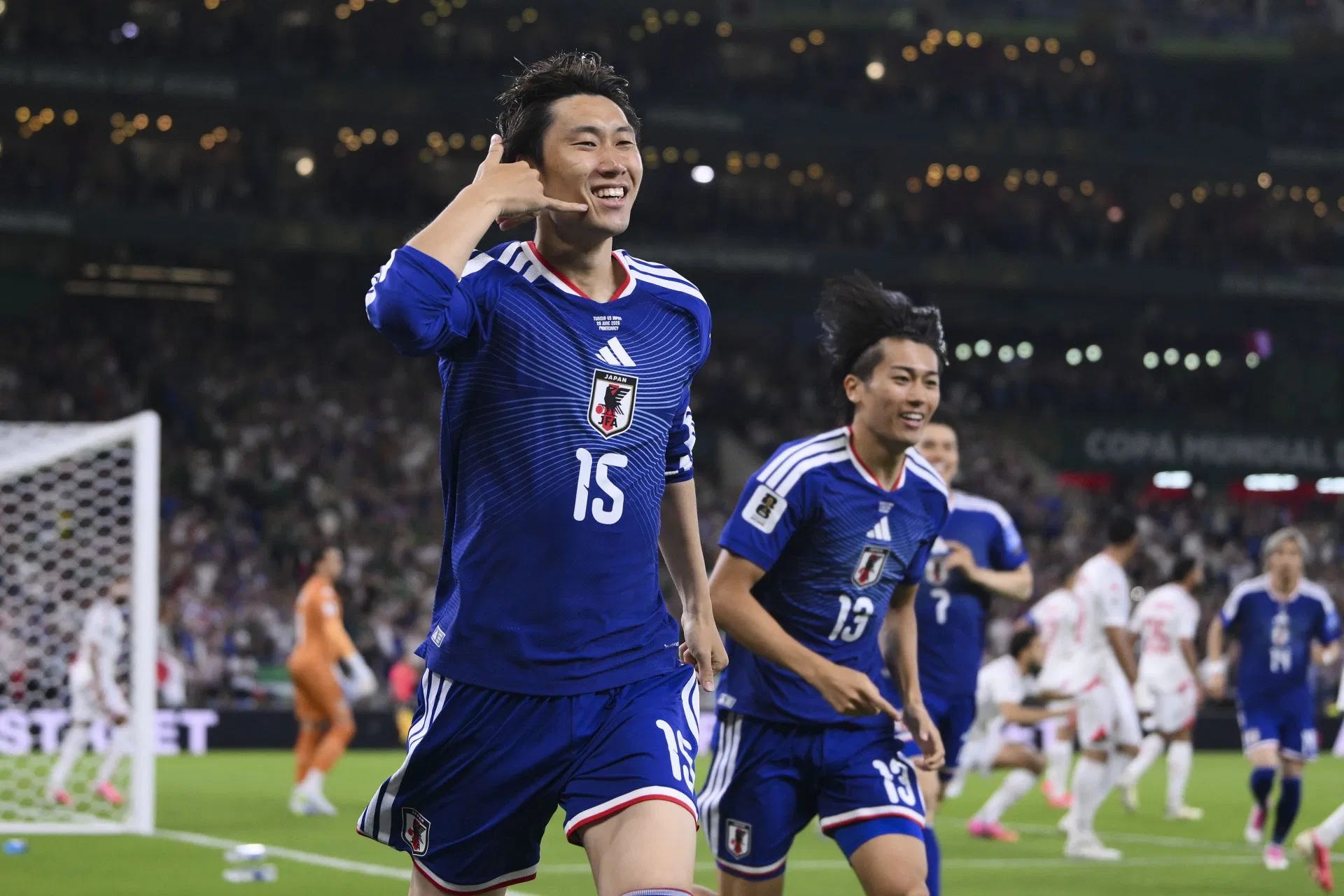
If Japan wins, Daichi Kamada will be the reason why.
Since Kubo’s injury, Kamada has become the player connecting almost everything Japan does in possession. He consistently finds the spaces that keep attacks moving. The result is a style of play that feels calm even when opponents are pressing aggressively.
Against Sweden, that becomes even more important.
Potter’s side will almost certainly defend with greater discipline than it did against the Netherlands, leaving fewer open lanes through the middle. Kamada’s movement between those lines is what gives Japan another way to progress the ball without relying entirely on speed down the wings.
If Japan spends most of the evening dictating possession, there’s a good chance Kamada is the reason why.
Prediction: Japan 2–1 Sweden
This feels much closer than the predictions suggest.
Sweden has enough attacking talent to trouble any defense left in this tournament, and I wouldn’t be surprised if Isak or Gyökeres found the scoresheet. Potter’s team should look far more organized after the disappointing performance against the Netherlands, and I expect a response.
I just trust Japan a little more.
Through two matches, no team has looked more comfortable adapting to different opponents without sacrificing its identity. Whether controlling possession, pressing high or defending with discipline, Japan has consistently found the right balance.
That’s difficult to do in tournament football.
I think Sweden makes this uncomfortable from start to finish.
In the end, Japan’s patience, movement and control of midfield prove to be the difference.
This has all the ingredients to be the best match of Day 15.
I think Japan edges it.
Australia Wants Time. Paraguay Can’t Afford It.
This is the kind of match the World Cup produces every four years.
One team knows a draw is enough. The other has no choice but to win.
Australia enters the final matchday with the advantage. After beating Türkiye and narrowly losing to the United States, Tony Popovic’s side controls its own destiny. Avoid defeat, and the Socceroos are through to the Round of 32.
Paraguay doesn’t have that luxury.
The victory over Türkiye kept Gustavo Alfaro’s team alive, but it also simplified the equation. Nothing short of three points will do. From the opening whistle, Paraguay has to chase the match. Australia can let it come to them.
That difference changes everything.
Popovic has built a side that’s comfortable defending for long stretches before striking in transition. Australia rarely panics when opponents dominate possession. In many ways, it prefers it. The longer Paraguay commits numbers forward, the more space begins to appear behind the midfield and fullbacks.
That’s exactly where the Socceroos become dangerous.
Miguel Almirón is suspended after FIFA handed him a one-match ban for covering his mouth during an on-field confrontation against Türkiye. Julio Enciso now becomes the creative focal point, while Isidro Pitta will shoulder even more responsibility in the penalty area. Alfaro has spent much of the week emphasizing composure rather than desperation, but replacing Almirón’s experience and pace is no simple task.
Australia isn’t at full strength either, as Jacob Italiano has been ruled out through injury, while veteran winger Mathew Leckie remains unavailable. Even so, Popovic has insisted his team won’t approach the match hoping to protect a draw. The objective, he says, is still to win.
Experience matters in matches like this. Australia has spent the last two decades making a habit of surviving high-pressure tournament moments. Paraguay has plenty of international pedigree of its own, but this particular group hasn’t been in many matches where every minute without a goal increases the pressure.
I’ll be watching the clock.
Every minute that passes without a Paraguayan goal makes the match more comfortable for Australia and more uncomfortable for everyone wearing red and white.
Paraguay has enough quality to create chances. The challenge is finishing them before impatience begins making decisions instead.
Player to Watch: Julio Enciso

If Paraguay reaches the Round of 32, I think we’ll spend tomorrow talking about Julio Enciso.
With Almirón suspended, even more of Paraguay’s attack runs through the Brighton forward. He’s the player capable of receiving the ball under pressure, beating defenders one-on-one and creating something when structured attacks begin to stall.
Don’t be surprised if the Socceroos send extra help toward Enciso whenever he drifts inside. Limiting his touches between the lines may be their biggest defensive priority all evening.
Some attackers disappear when the stakes rise. Enciso usually asks for the ball even more. Paraguay will need that confidence tonight because opportunities probably won’t come often.
He just has to create the moment that keeps Paraguay’s tournament alive.
Prediction: Australia 1–1 Paraguay
This feels like ninety minutes of tension.
Paraguay should control possession, create more chances and spend most of the evening pushing Australia toward its own penalty area. That’s the game state everyone expects.
I’m just not convinced it’s the game state that favors Paraguay.
Australia has looked increasingly comfortable defending compactly before attacking quickly in transition, and the pressure only grows heavier for Paraguay as the clock moves forward. The longer the match stays level, the more desperate Paraguay becomes and the more dangerous Australia’s counterattacks should be.
I think Paraguay finds opportunities. I also think Australia survives.
It might be the most stressful match of Day 15.
The United States Has Already Advanced. The Competition Isn’t Over.
The United States is trying to answer a different question: who deserves to be on the field when the knockout rounds begin?
Mauricio Pochettino has already secured first place in Group D, but Thursday’s match against Türkiye feels anything but meaningless. Four starters carrying yellow cards; Tyler Adams, Antonee Robinson, Chris Richards and Folarin Balogun, won’t start after Pochettino confirmed he isn’t willing to risk losing them for the Round of 32. Christian Pulisic has been cleared after his calf injury, although the U.S. manager has kept everyone guessing about whether he’ll start or come off the bench.
That leaves opportunities all over the field. And opportunities like these don’t usually come twice at a World Cup.
Pochettino summed up his expectations with one sentence this week: he wants players willing to “eat the grass.”
He wants to know who he’ll trust once every mistake becomes season-ending.
That’s why I don’t think this match is really about Türkiye. It’s about the players trying to force their way into Pochettino’s plans.
Türkiye, though, won’t make that easy.
Back-to-back defeats have already ended Vincenzo Montella’s team’s hopes of reaching the knockout rounds, but the Turkish manager has spent the week talking about pride instead of disappointment. He knows the standings won’t change. He also knows a win over one of the tournament hosts would change the way this World Cup is remembered back home.
That makes Türkiye dangerous. It has nothing left to lose.
Here’s what I’ll be watching.
The United States has looked increasingly comfortable attacking quickly after winning possession, with its front line creating problems before opponents can recover their defensive shape. Türkiye has often been at its best when controlling possession, but chasing matches has exposed spaces that Paraguay and Australia both exploited.
I don’t expect the Americans to dominate possession, but I do expect them to attack with purpose whenever the opportunity appears. That’s been one of the biggest changes under Pochettino.
The team no longer waits for matches to happen. It tries to dictate them.
I’ll also be watching for chemistry.
The lineup should look very different from the one that beat Australia, and the United States doesn’t need perfection tonight. It needs to leave Los Angeles with more players capable of contributing when the pressure rises next week.
If that happens, this match will have accomplished exactly what Pochettino wanted.
Player to Watch: Weston McKennie
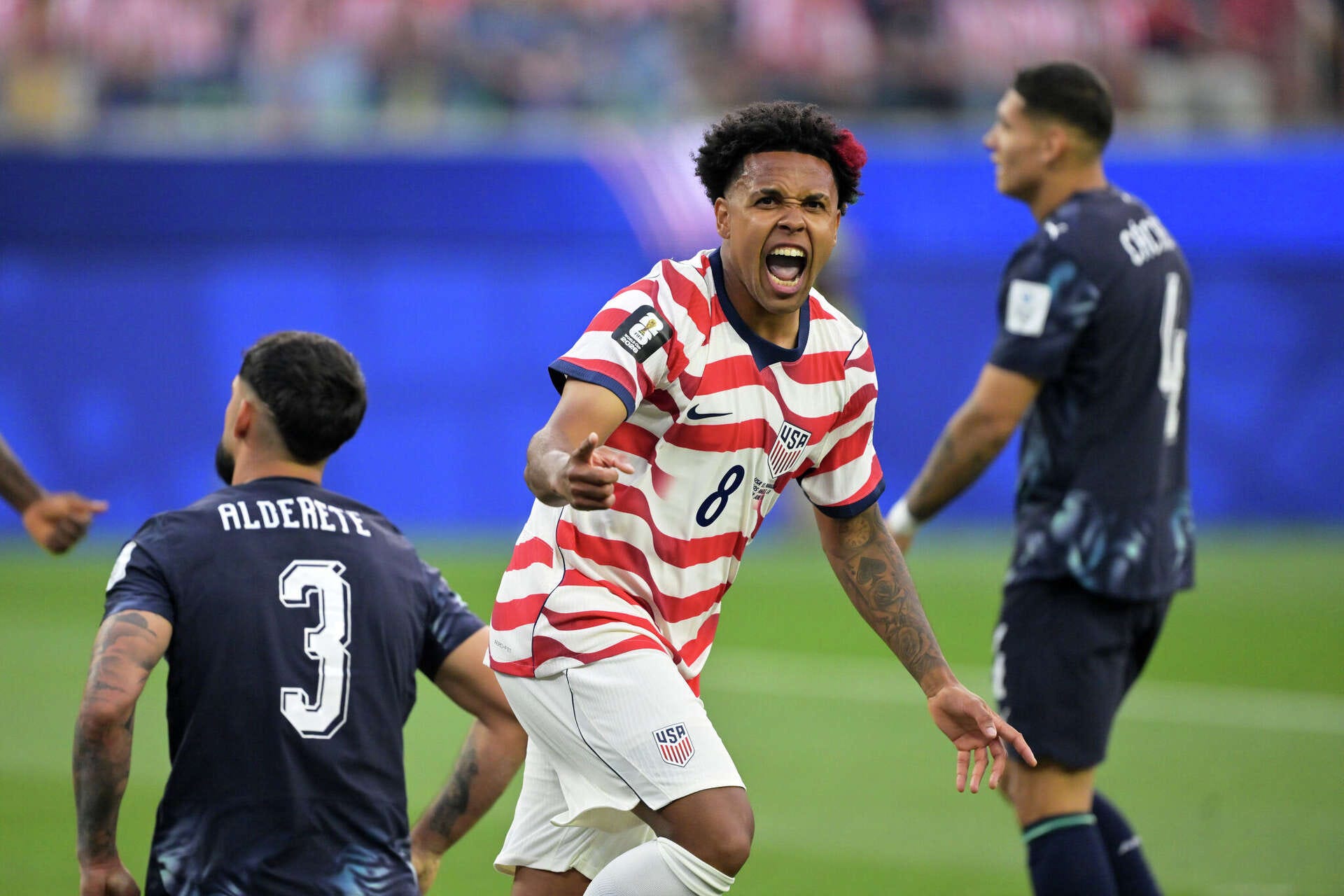
I think this match matters more for Weston McKennie than almost anyone on the field.
With Tyler Adams expected to begin on the bench, McKennie has another chance to remind everyone why he’s been one of the United States’ most important tournament players over the last several years.
He’s the player who changes matches without always appearing in the highlights. He wins second balls, arrives late in the box, and breaks up attacks before they become dangerous.
And when the tempo starts to drift, he’s usually the one dragging it back in the right direction.
Against a Turkish midfield that still has plenty of technical quality, that influence could matter as much as anything the United States does going forward.
McKennie has a chance to make sure Pochettino can’t imagine starting them without him.
Prediction: United States 2–1 Türkiye
The United States needs ninety more minutes of confidence.
Türkiye should play with freedom now that elimination has already been confirmed, and I wouldn’t be surprised if that leads to a much more open match than many people expect. There are enough talented players on both sides for this to become one of the more entertaining games of the day.
I still trust the U.S.
Pochettino has raised the standard throughout this tournament, and even a rotated lineup should have enough quality to create chances in transition. Türkiye will probably have its moments, especially if the Americans need time to settle with several changes in the lineup.
In the end, I think the United States does enough.
Building momentum before the knockout rounds is worth far more than another three points.