

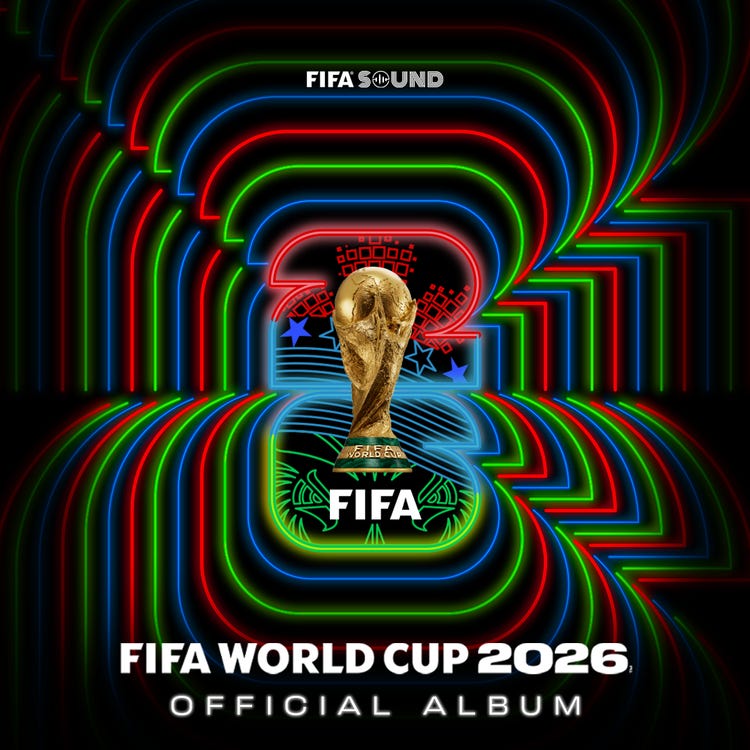
The FIFA World Cup has produced some of the most iconic songs in sports history. From Shakira’s Waka Waka to K’naan’s Wavin’ Flag, the tournament has long used music to capture the excitement, emotion, and global unity that make the World Cup special.
For 2026, FIFA took a different approach. It assembled an 18-track album featuring artists from around the world, including Shakira, Daddy Yankee, Future, Tyla, The Rolling Stones, and even IShowSpeed. The result is an album that spans multiple genres, cultures, and languages; sometimes brilliantly and sometimes confusingly.
So, I listened to all 18 songs. Here’s what worked, what didn’t, and which tracks actually feel like the World Cup.
Goals – The album opens with a clear theme: cultural fusion. A collaboration between Korea’s LISA, Brazil’s Anitta, and Nigeria’s Rema feels like a perfect representation of the World Cup’s global reach. Unfortunately, the execution never quite matches the idea. The track often feels like three separate performances stitched together instead of a proper blend of cultures.
Anitta’s contribution feels brief, while LISA offers little connection to the sport beyond the repeated “goals” hook. Rema taps into his hip-hop side and delivers a fast-paced verse that provides the energy this track desperately needed. The instrumental is fun and commercially appealing, but as the opening song of a World Cup album, it lacks the atmosphere that the tournament’s most iconic anthems have defined. It’s an enjoyable listen, but it never feels worthy of opening the soundtrack to the world’s biggest sporting event.
Game Time – A much more cohesive track than Goals, Future and Tyla deliver a track that feels perfect for the moments leading up to kickoff. The booming production, trumpet-driven instrumental, and direct references to football create the sense of anticipation that a World Cup album should strive for. FIFA has promoted the song as capturing the adrenaline and excitement surrounding opening kickoff, and that energy is felt throughout the record.
Future’s presence brings intensity, while Tyla adds melody and a confident voice that helps the collaboration feel balanced. It’s easy to imagine this blasting through stadium speakers before teams take the field. While it lacks the memorable chorus or emotion that defines the greatest World Cup anthems, it gets the assignment far better than most tracks on the album. In many ways, it feels like a stronger choice to open the project than Goals. Expect to hear this one in the American ceremony on Friday.
Illuminate – Picking up where Game Time left off, Illuminate leans into the album’s grand, stadium-sized feel with a chorus and a message centered around unity and inspiration. The inclusion of Arabic vocals is a nice touch, reflecting the growing influence of Middle Eastern football on the world stage. With EDM-inspired production, the track is easy to imagine echoing through a packed stadium or accompanying a highlight reel.
Where the song falls short is in its execution. The heavy bassline rarely lets up, becoming repetitive as the track progresses and limiting some of its emotional impact. While the chorus is catchy and the message of shining together is fitting for an event built on international diversity, the song doesn’t do much sonically that makes it stand out from countless other festival EDM tracks. By the halfway point, I felt like I’d already heard everything the song had to offer. Still, its inclusive spirit and crowd-friendly energy make it a solid addition to the album.
Echo – Seeing Daddy Yankee on this project, expectations were naturally high. Few artists have done more to bring Latin music to a global audience, and Echo seems designed to be an uplifting stadium anthem. Synths, layered vocals, reverb-heavy production, and a message centered around inspiration and perseverance. Yet somehow, the track never fully takes off.
Rather than building toward a memorable climax, Echo spends much of its runtime circling the same ideas without delivering a moment. The production is polished and catchy, but it lacks the energy and emotional punch needed to stand alongside the tournament’s most memorable songs. I kept waiting for the song to take off, and it never quite did. Daddy Yankee’s presence alone gives the track weight, but for a song meant to leave a lasting impression, Echo feels surprisingly forgettable. It’s an enjoyable listen, just not the statement performance many were hoping for.
Por Ella – One of the album’s most creative concepts arrives with Por Ella, as Belinda and Los Ángeles Azules transform the World Cup trophy into a love interest, singing about it as “the girl” that everyone is chasing. The track blends Belinda’s pop background with the group’s signature cumbia sound, creating one of the album’s strongest celebrations of Mexican music and culture.
Rather than aiming for a stadium anthem, Por Ella succeeds by embracing its identity. The song is lighthearted, romantic, and easy to dance to, offering a refreshing change of pace from the album’s more energetic tracks. It’s simple. As the album’s first true showcase of Mexican musical traditions, Por Ella feels authentic and uniquely tied to one of the tournament’s host nations.
Three Nations – On paper, Three Nations has all the elements to be one of the album’s standout tracks. Bringing together Natanael Cano, 21 Savage, and French Montana creates a collaboration that mirrors the international nature of the World Cup, though calling it Three Nations and not including a Canadian artist from one of the host countries is certainly a choice. The booming production and stadium-style chants are perfect for a stadium atmosphere, and there are moments where the concept genuinely shines.
The song’s biggest strength is 21 Savage, whose laid-back delivery and unmistakable voice bring a confidence that helps unite the track. The stadium-chant sample, reminiscent of the Atlanta Braves’ tomahawk chop, is a clever touch that ties the song to one of America’s most recognizable atmospheres while also nodding to Savage’s Atlanta roots.
However, the collaboration never fully comes together. Cano’s verses feel uneven at times, French Montana’s appearance is surprisingly brief, and the track falls into the generic hip-hop song. There are flashes of a World Cup song here, but a stronger sense of chemistry (and perhaps more ambitious choices from its feature list) could have elevated Three Nations into something far more memorable.
No Place Like Home – If FIFA wanted a song that captures what this album is supposed to be, it’s No Place Like Home. The track pairs Canadian icon Nelly Furtado with Nigerian superstar Davido to create a vibe that perfectly captures the spirit of a global tournament. Rather than relying on massive noises or stadium-sized production, the song succeeds through its warmth. This collaboration actually sounds like the artists are on the same page.
America Foster’s chorus is simple, memorable, and easy to sing along with, supporting the idea that every nation arrives at the World Cup carrying the pride of home. Davido’s influence adds an Afrobeats-inspired rhythm that gives the song its soul, while Furtado’s vocals provide a sense of familiarity and comfort. This feels like the song FIFA thought Goals was going to be. A song that doesn’t just talk about diversity, but actually sounds like it. In a project built around bringing cultures together, No Place Like Home is one of the few tracks that fully delivers on that promise.
In The Stars – Few names carry as much weight as The Rolling Stones, making In The Stars one of the album’s most intriguing inclusions. The track changes the band’s sound within a more modern, electronic feel, blending guitar riffs with polished production designed for a current sporting event. On paper, the concept is intriguing. One of rock’s most iconic acts is contributing to a World Cup album nearly seven decades into their career.
The result, however, feels empty and dull. I can picture this playing while fans are filing into the stadium, but I can’t picture anyone talking about it a week later. You have The Rolling Stones on your World Cup album, and somehow the result feels like background music. It’s easy to imagine playing in the background before kickoff, but much harder to imagine fans remembering it long after the final whistle.
Show Me – Few songs on the album embrace cultural fusion as aggressively as Show Me. Built around bachata, a genre with roots stretching from the Dominican Republic back to African musical traditions, the track pairs Nigerian superstar Ayra Starr with Atlanta rapper Latto in an attempt to bridge multiple corners of the musical world. The song is vibrant, danceable, and full of personality.
The clear standout is Ayra Starr, whose smooth vocals carry the song. Unfortunately, the collaboration never fully clicks. Latto’s appearance feels disconnected from the rest of the track, with her tone and delivery creating a harsh contrast. Every time Ayra Starr got going, I found myself waiting for Latto’s verse to end so the song could get back on track. The chemistry never quite gets there, which is frustrating because the instrumental is begging for it.
Mi Mexico Lindo – If any song serves as a love letter to a host nation, it’s Mi Mexico Lindo. Alejandro Fernández delivers a heartfelt tribute to Mexico through the lens of regional Mexican music. The song embraces the country’s traditions and culture, with references to its people, beaches, and iconic symbols, creating a love letter to the nation.
That authenticity is the track’s greatest strength. Fernández doesn’t attempt to chase modern pop trends or stadium-sized production, instead allowing the genre’s emotion and storytelling to take center stage. While the song lacks the scale and power associated with many tournament anthems, it works as a showcase of Mexico. It feels sincere, personal, and undeniably Mexican. As someone who’s spent the last few weeks listening to stadium anthems and EDM drops, hearing a mariachi-inspired tribute to Mexico was refreshing.
Blessings – Blessings offers a noticeably different pace from much of the album, providing a smoother, more reflective sound. The chemistry between Stormzy and Angel is brilliant, creating a relaxed atmosphere that feels comforting and easy to revisit. Their performances are strong, and the song’s positive message leaves listeners with a sense of optimism. The addition of Haitian-American artist Fridayy is a nice touch, especially with Haiti set to make its first World Cup appearance in 52 years.
The issue is that it doesn’t feel connected to the World Cup at all. Unlike other tracks on the album, there are few references to football, competition, or unity, making it feel as though it could have been lifted from an entirely different project. On its own, Blessings is an enjoyable listen. Halfway through, I forgot this was supposed to be a World Cup song. It ends up feeling somewhat disconnected from the larger theme. It’s still a great listen.
Energy – If FIFA was searching for a track to soundtrack highlight reels, beach parties, and social media montages, Energy is probably the answer. Built around thumping production, synths, and a repetitive hook, the song fully embraces its role as a high-tempo dance anthem. Ava Max’s vocals provide the track’s melodies, while BIA delivers a contrasting verse that keeps the collaboration from becoming overly predictable.
The song doesn’t break much new ground, and some of its football references, particularly the “kick it like FIFA” lyric, feel a bit forced. Still, that’s not really the point. Energy succeeds because it understands exactly what it’s trying to be: a fun burst of excitement. This isn’t making my World Cup anthem hall of fame, but it’ll probably end up in a few highlight montages this summer.
Lighter – Beer. Fishing. Ford F-150. Freedom. If someone asked AI to generate a modern country song, Lighter might be the result. Led by Jelly Roll and joined by Mexican star Carín León, FIFA’s first single from the album is its most polarizing. On paper, the collaboration makes sense. Bring together two massive artists from two host nations and create a crossover hit. In practice, it feels completely separate from the event it’s supposed to represent.
The song isn’t that bad; it just feels misplaced. The slow tempo, production, and reflective style are the exact opposite of what most fans expect from a World Cup anthem. While Carín León’s presence adds an interesting element to traditional country, the track rarely references football, competition, or the spirit of the tournament. Lighter sounds like a song that accidentally landed on a World Cup album from somebody else’s playlist. FIFA took a risk making it the lead single; judging by the reaction it received, that gamble never quite paid off.
Siir Siir – Few songs on the album lean harder into the World Cup’s international identity than Siir Siir. Norah Fatehi and Vegedream bring together influences from North Africa, the Middle East, and French-speaking Africa, creating a song that feels designed for celebration. The production is upbeat, using rhythmic percussion, chanting vocals, and a melody that is easy to follow whether you’re in a stadium or on a dance floor.
Vegedream’s repeated refrain of “La Copa del Mundo” becomes almost hypnotic as the song progresses, and creates a sense of anticipation. While the track never takes many risks and stays comfortably within its lane, that’s part of its appeal. This is the type of song I’d expect to hear outside the stadium three hours before kickoff.
Partidazo – From the start, Partidazo grabs attention with one of the album’s strongest instrumentals. The synth-driven production is bright, addictive, and full of momentum, creating the basis for what could have been a standout World Cup track. Danny Ocean’s smooth vocals fit naturally over the beat, giving the song an easygoing charm that makes it an enjoyable listen, sonically.
The problem is that the songwriting rarely matches the quality of the production. The song attempts to compare romance to scoring a spectacular goal, but the concept never develops beyond cringeworthy metaphors and eventually just feels disconnected from the tournament itself. There is a great instrumental hiding underneath. Unfortunately, the lyrics never quite rise to meet it.
Champions – I still can’t believe this is real.
After his viral 2022 hit World Cup became a fan favorite during the tournament in Qatar, IShowSpeed was allowed to create an official FIFA anthem; surprisingly, he rises to the occasion. From the iconic “Let’s play football,” to the booming drums, chants, and stadium-ready production, the track understands exactly what a modern anthem is supposed to sound like.
More importantly, Champions captures the emotion of the sport. The song feels grand, energetic, and unapologetically over-the-top, embracing the same sense of spectacle that makes the World Cup special. The production builds toward a cinematic finale that feels closer to a head-bumping Imagine Dragons cut than a traditional football song, but it works.
Speed’s vocals are far from perfect, yet that’s part of the charm. Unlike some contributors on this album, he genuinely feels connected to the culture surrounding the sport, and that passion comes through in every second of the track. Champions may not be the most polished song on the project, but it is one of the few that truly feels like the World Cup.
Love Always Wins – If there is one song on the album that fully embraces FIFA’s vision of cultural fusion, it might be Love Always Wins. Bringing together Zama, Shaggy, and Cimafunk, the track blends Latin, reggae, funk, gospel, and Afro-Caribbean influences into a celebration of diversity. On paper, it sounds like a chaotic combination. Somehow, it works. Mostly.
Each artist contributes something distinct. Shaggy provides Jamaican flair, while Cimafunk gives the song an energy rooted in his Cuban background. Zama’s uplifting chorus gives the track a positive, almost gospel-inspired spirit. This song feels like FIFA’s mission statement put to music. While the blend of genres can occasionally feel scattered and lacks some sonic cohesion, Love Always Wins works because of its optimism. It’s a mess at times, but it works.
Dai Dai – Sixteen years after Waka Waka became the defining song of the 2010 World Cup, Shakira returns to football’s biggest stage with Dai Dai. Joined by Nigerian superstar Burna Boy, the Colombian icon delivers an energetic, globally-minded anthem built around perseverance, belief, and unity. For Shakira, that’s nothing new.
From the opening moments, the song radiates optimism, with Burna Boy’s Afro-fusion influence blending naturally with Shakira’s iconic voice and infectious delivery. No, it’s not Waka Waka. But expecting another Waka Waka is probably unfair to everyone involved.
What separates Dai Dai from many tracks on the album is its understanding of what makes a World Cup song resonate. The chants, uplifting message, and refrain (featuring five different languages) give the track a sense of inclusivity that reflects the tournament itself. While it may not reach the heights of Waka Waka or La La La, that’s an incredibly high bar to clear. Dai Dai succeeds on its own. In a world that often feels divided, Shakira offers a reminder of the joy, hope, and togetherness that the World Cup can inspire. The queen’s track record remains intact.
After listening to all 18 tracks, FIFA’s first World Cup album feels ambitious, diverse, occasionally chaotic, and at its best when different cultures come together around a shared love of the game. Perhaps fitting, as these are all emotions that come with the World Cup.
Not every song succeeds. A handful feel disconnected from football, while others never quite live up to the star power attached to them. Yet when the album works, whether it’s the energy of Game Time, the passion of Champions, the warmth of No Place Like Home, or Shakira’s triumphant return on Dai Dai, it captures the excitement, unity, and global spirit that make the World Cup special.
Will this album produce the next Waka Waka or Wavin’ Flag? Probably not. Those songs hold a rare place in our culture. But FIFA deserves credit for trying something different. Rather than putting all of its hopes into a single anthem, it created a soundtrack that reflects the diversity of the modern game itself. Like the World Cup, some moments are unforgettable, some are forgettable, and everyone will walk away with a different favorite.
If I had to pick the songs that best balance replay value with World Cup energy, this would be my top five:
No Place Like Home
Champions
Dai Dai
Siir Siir
Blessings